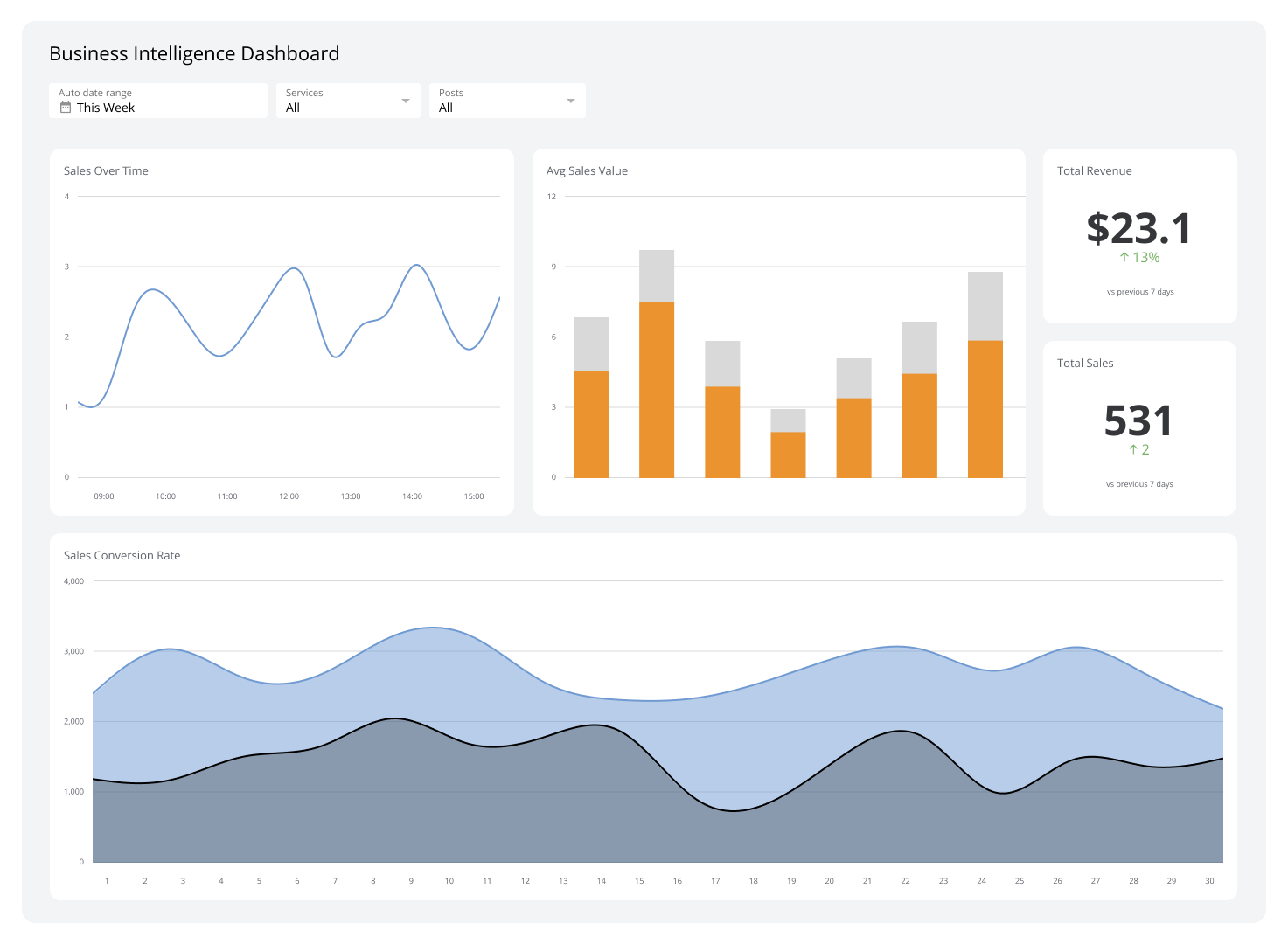
How AI agents are transforming analytics. From passive dashboards to active systems that make decisions.
The future of analytics is not dashboards. It is AI agents. In 2026, we are witnessing a fundamental shift: from passive dashboards that show data to active systems that make decisions. What is an AI Analytics Agent? An AI analytics agent is a system that: 1. Continuously monitors your data. 2. Automatically identifies anomalies and patterns. 3. Recommends actions without waiting for a human to ask. 4. Learns from outcomes and improves over time. This is not science fiction. Companies like Google, Amazon, and Microsoft are already using AI agents in their analytics systems. What Does This Look Like in Practice? Imagine you are a retail company. Your AI analytics agent: Monitors sales in real-time. Notices that sales in region B dropped by 15% compared to yesterday. Automatically checks competitor pricing. Identifies that a competitor lowered prices. Recommends a pricing adjustment. Implements the recommendation (if authorized). Monitors the outcome. The entire process takes minutes, not weeks. Why This Matters: Speed. Decisions that used to take weeks now take minutes. Accuracy. AI makes fewer mistakes than humans. Scale. One AI agent can monitor thousands of metrics simultaneously. Cost. Fewer people needed to manage analytics. The Challenges: AI agents are powerful, but they also create challenges: 1. Trust. How do you trust a system making decisions? 2. Explainability. Why did the agent make this decision? 3. Control. How do you prevent the agent from making bad decisions? 4. Ethics. What if the agent's decision is legal but unethical? How to Prepare Your Company: If you want to be ready for AI analytics agents, start now: 1. Clean your data. AI agents need clean, reliable data. 2. Define decision rules. What decisions should the agent make? 3. Start small. Do not let the agent make all decisions. Start with low-risk decisions. 4. Monitor outcomes. Track whether the agent's decisions lead to better results. 5. Iterate. Improve the agent based on outcomes. Conclusion: The future of analytics is AI agents. Companies that adopt this technology first will gain enormous competitive advantage. The question is not whether AI agents will transform analytics, but how quickly your company can adapt to this new reality.
Key Takeaway
"The architecture of the future is built not on static reports, but on dynamic, self-healing data streams that empower every level of the organization."